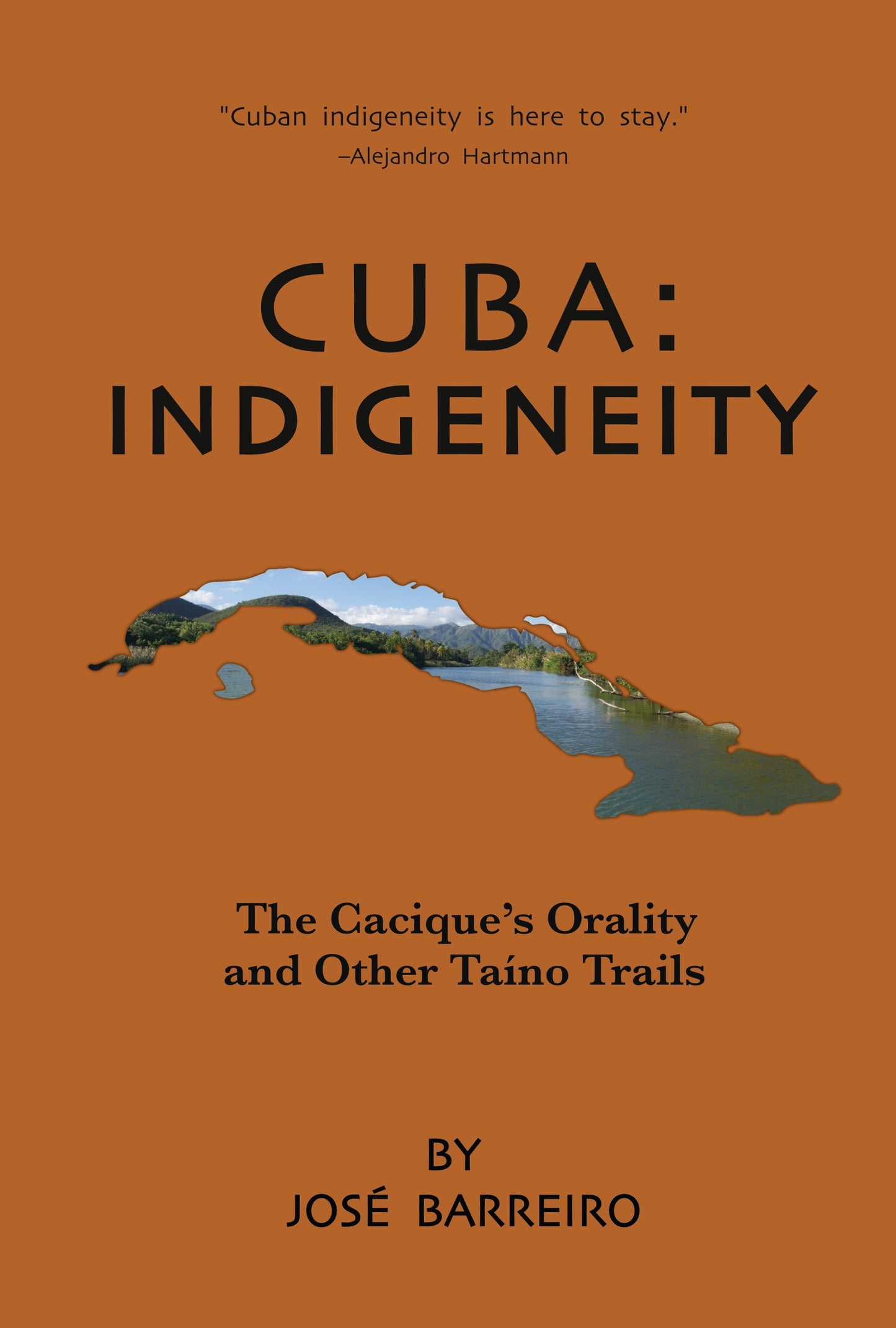
Cuba: Indigeneity, The Cacique’s Orality and Other Taino Trails
Cuba: Indigeneity, The Cacique’s Orality and Other Taino Trails
Couldn't load pickup availability
The fifteen essays and articles in the pages of Cuba: Indigeneity: The Cacique’s Orality and Other Taino Trails highlight four decades of tireless research and relationships cultivated by José Barreiro (Hatuey) with descendant communities of Cuba’s Indigenous people. As a novelist, essayist, journalist, indigeneity activist and director of the Office for Latin America at the Smithsonian National Museum of the American Indian for a decade, nobody is more qualified to bring to life the history and influence of the Taíno in the past and present evolution of Cuban society.
The cacique, or chief, in the subtitle of this book refers to Francisco “Panchito” Ramírez Rojas of eastern Cuba, a respected elder and hereditary chief with whom the author developed a strong friendship and working partnership of over thirty years. With Cacique Panchito and others, Barreiro traversed Cuba to find and document the cacique’s large extended kin known as la Gran Familia. A family with thousands of members, the Gran Familia spreads throughout the island, proudly “indio” and also profoundly Cuban.
Weaving together interviews, personal experiences and research, the author eloquently outlines the persistence of the almost invisible and seldom acknowledged Indigenous legacy in Cuban popular culture. He also skillfully dismantles not just the myth of extinction, but also the imaginary, but persistent line separating what we may consider the Cuban national ethos from its strongly rooted Indigenous origin.
As Cacique Panchito states, “el indio” is here, rooted, and manifested in the country’s history before the European colonial invasion, in the Cuban Wars of Independence from Spain, and later Revolution, influencing the heart and mind of national heroes such as José and Antonio Maceo, and José Martí. It’s in the food, it’s in the culture, it’s in “lo cubano,” Panchito insists.
With this work, and after dedicating his extensive career to sociocultural issues and to the defense and well-being of Indigenous peoples of the American hemisphere, Barreiro returns home.
"The stories told in Cuba: Indigeneity are unique to Cuba and they are also a common story amongst Indigenous peoples in every part of Mother Earth. The stories of extinction, invisibility, devaluation, and demonization are in every place. Every place has been colonized. But in José Barreiro's book. we also find also the stories of persistence, resilience and the maintenance of the teachings of Mother Earth. And this is the message from Cuba's Indigenous: to care for one another and to care for the land."
– Lorna Wänosts'a7 Williams (Lil'watul), Professor Emerita University of Victoria: Chair First Peoples Cultural Foundation
"For over three decades, since 1989. when José Barreiro first cam to me in Baracoa. We have campaigned to correct the myth of Indigenous extinction in Cuba. It has been a meaningful journey, full of cultural and historical wonders. For one, it has achieved a new recognition for the Indigenous peoples of Cuba and for Cuban Indigeneity."
– Alejandro Hartmann, Historian, Office of the Conservator of the First City of Baracoa, Cuba
Share